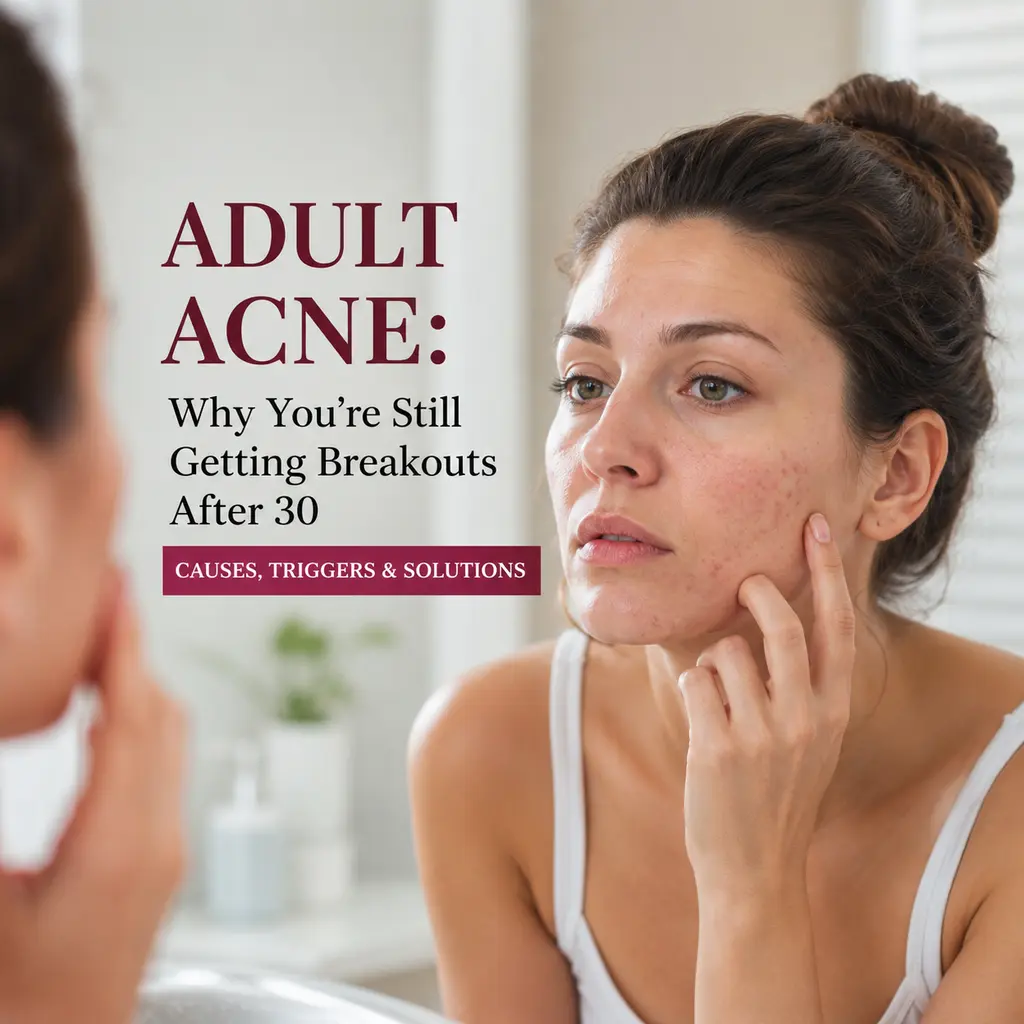

There is a common belief that acne disappears after the teenage years, but many women discover that breakouts continue long after turning 30. Some even experience adult acne for the first time in their thirties. This can feel frustrating, confusing, and emotionally exhausting, especially when you thought those skin struggles were already behind you.
Adult acne in women over 30 is more common than most people realize. Dermatologists continue to see growing numbers of adult women dealing with painful pimples, jawline breakouts, clogged pores, and stubborn acne marks. Unlike teenage acne, adult female acne often behaves differently. It tends to appear deeper under the skin, takes longer to heal, and may leave marks behind.
I’ve also noticed many women become overly harsh with their skin after 30 because they panic when breakouts suddenly appear. The good news is that understanding why these breakouts happen can make a huge difference. Once you know the triggers, your skin becomes easier to manage with the right skincare habits, stress control, and gentle treatment methods.
Why Adult Acne Happens After 30
Many women feel shocked when they suddenly start getting acne after 30. In reality, the body goes through hormonal, emotional, and lifestyle changes during this phase of life. These changes affect oil production, skin repair, and inflammation levels.
Hormonal acne in women is one of the biggest reasons behind adult breakouts. Hormones naturally shift during menstrual cycles, pregnancy, postpartum recovery, stress, and even early stages of menopause. These hormonal changes increase oil production inside the skin, which can clog pores and create inflammation.
At the same time, adult skin is usually more sensitive than teenage skin. Harsh products that once worked in your twenties may now damage the skin barrier and make acne worse instead of better.
It is observed, some women try harsh products to stop breakouts quickly, but following a balanced approach to natural acne treatment often supports healthier and calmer skin over time.
The Difference Between Teenage Acne and Adult Acne
Teenage acne often appears across the forehead, nose, and cheeks because of puberty-related oil production. Adult acne usually targets the lower part of the face, especially the chin, jawline, and neck.
Breakouts after 30 also tend to be deeper and more painful. Many women experience cystic acne in women around the jawline area. These bumps may stay under the skin for days or even weeks.
Another major difference is skin healing. Adult skin takes longer to recover from inflammation. This is why acne marks and dark spots often stay visible longer than expected. Understanding these differences is important because adult female acne treatment requires a gentler and more balanced approach.
Hormonal Acne in Women Is Extremely Common
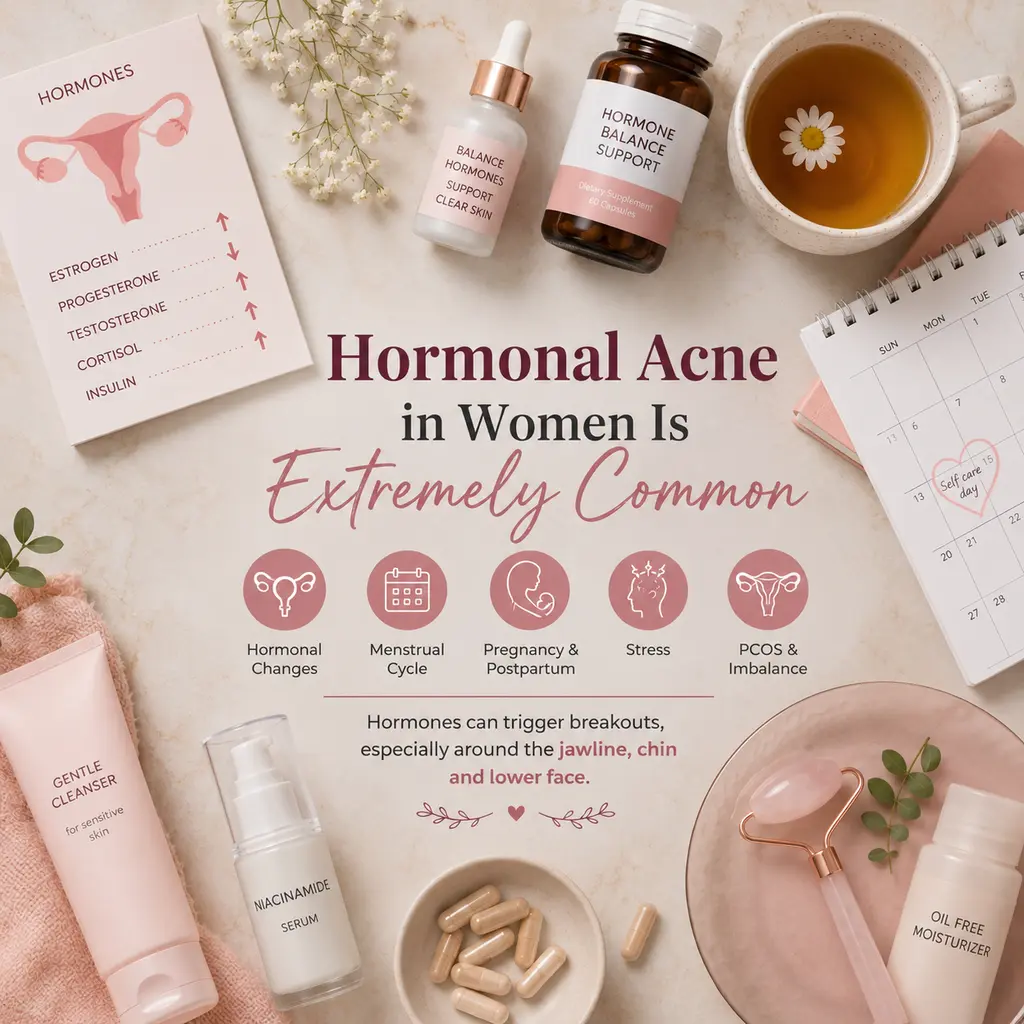
Hormonal breakouts in women are not always dramatic, but they are often persistent. Many women notice acne appearing before their monthly cycle or during stressful periods. Some experience breakouts during pregnancy or after having children. Others start seeing acne symptoms during their late thirties and early forties due to hormone fluctuations.
Hormonal acne usually appears around the chin and jawline. This area is strongly connected to hormonal activity in the body. Pimples may feel sore, swollen, and difficult to treat with normal spot creams.
Stress can make hormonal acne even worse. When stress levels rise, the body produces more cortisol, which increases oil production and inflammation. This creates the perfect environment for recurring breakouts. Managing hormonal acne in women often requires patience, stress control, healthy habits, and consistent skincare routines.
Stress Plays a Bigger Role Than Most People Think
Many women notice their skin becomes worse during emotionally stressful periods. Busy work schedules, lack of sleep, family responsibilities, and mental exhaustion all affect the skin.
Stress and acne in adults are deeply connected. High stress levels increase inflammation throughout the body and slow down skin healing. This is why breakouts often appear during difficult periods in life.
Poor sleep also affects skin repair. During sleep, the skin naturally recovers from daily damage. Without enough rest, inflammation remains higher and breakouts may become more frequent.
Creating healthier daily habits can help reduce these stress-related flare-ups. Even simple changes like improving sleep quality, staying hydrated, and taking breaks during the day can support clearer skin over time.
Overusing Skincare Products Can Make Acne Worse
One of the biggest mistakes women make is trying too many products at once. When breakouts appear, it is tempting to buy multiple cleansers, scrubs, acids, and spot treatments hoping for quick results. Unfortunately, this often damages the skin barrier. Skin barrier repair for acne is extremely important because irritated skin becomes more inflamed and sensitive.
Adult skin does not respond well to harsh treatment. Over-exfoliating can strip natural oils and trigger even more oil production. Using strong products too frequently may cause redness, peeling, and painful irritation.
Women with oily skin usually benefit more from a simple and balanced skincare routine for oily skin instead of using too many strong acne products together.
A gentle skincare routine for acne prone skin usually works better than aggressive treatments. Calm skin heals faster and responds more positively to consistent care.
Why Your Skin Barrier Matters So Much
The skin barrier acts like a protective shield. It keeps moisture inside the skin while protecting it from irritation and bacteria. When this barrier becomes weak, acne-prone skin becomes more reactive. Many women with adult acne unknowingly damage their skin barrier by over-cleansing, using strong scrubs, or mixing too many active ingredients together.
Signs of a damaged barrier include tightness, redness, burning, sensitivity, and sudden breakouts. Even expensive skincare products may stop working properly when the barrier is unhealthy. Supporting skin barrier repair for acne means focusing on gentle cleansing, proper moisturizing, and avoiding unnecessary irritation.
Diet Can Influence Adult Acne
Diet alone may not fully cause acne, but it can influence inflammation levels inside the body. Some women notice breakouts becoming worse after eating large amounts of processed foods, sugar, or dairy products. Foods high in sugar may increase insulin levels, which can affect hormones and oil production. This is one reason why some women experience more acne during unhealthy eating periods.
A balanced diet with vegetables, fruits, healthy fats, and enough water supports healthier skin from within. Drinking water regularly also helps the skin stay balanced and hydrated. The connection between food and skin is different for everyone. Paying attention to personal triggers may help reduce future flare-ups.
Adult Acne Can Affect Confidence Deeply
Many women feel emotionally affected by acne after 30 because society often treats acne as a teenage issue. Breakouts during adulthood can create embarrassment, frustration, and self-consciousness.
Some women avoid social events or feel uncomfortable without makeup. Others constantly check mirrors or become anxious about new pimples appearing before important occasions.
It is important to remember that adult acne is extremely common and does not define beauty or self-worth. Skin changes are part of life, and healing takes time. Treating your skin with patience instead of anger creates a healthier relationship with both skincare and self-confidence.
The Importance of a Consistent Skincare Routine
Consistency matters more than perfection. Many women switch products too quickly because they expect instant results. In reality, skin usually needs several weeks to respond to a routine. A skincare routine for adult acne should focus on balance. Gentle cleansing, lightweight moisturizing, and sun protection are essential foundations.
Using non-comedogenic products can help reduce clogged pores without making the skin feel heavy. Gentle ingredients often work better for adult acne than harsh treatments. A simple routine followed consistently usually produces better results than a complicated routine that changes every week.
Following a gentle morning skincare routine for glowing skin helps remove overnight oil buildup and prepares acne-prone skin for the day ahead.
Why Sunscreen Matters for Acne-Prone Skin
Many women with acne skip sunscreen because they worry about clogged pores. However, unprotected sun exposure can worsen acne marks and inflammation. Sun damage also weakens the skin barrier and slows healing. Acne marks often become darker and more noticeable without daily protection.
Modern sunscreens designed for acne prone skin are much lighter than older formulas. Mineral sunscreens are especially popular among women with sensitive skin because they feel gentler and less irritating. Protecting the skin daily supports healthier healing and prevents long-term discoloration.
Adult Acne and Hormonal Changes During Different Life Stages
Women experience hormonal shifts throughout life. Pregnancy, postpartum recovery, birth control changes, and early menopause can all influence acne. Some women suddenly develop acne after stopping hormonal birth control. Others notice their skin changing after having children. Hormones continue affecting oil production well into adulthood.
Menopause and acne may also appear together in some women because hormone levels become less stable during this transition. Understanding that these changes are normal helps reduce fear and frustration when new breakouts appear.
Picking Pimples Can Cause Long-Term Damage
It can feel tempting to squeeze painful pimples, especially when they appear in visible areas. However, picking acne often pushes inflammation deeper into the skin. This increases the risk of scarring, infection, and dark marks that take months to fade. Adult skin already heals more slowly, so unnecessary picking can create long-term damage.
I made this mistake myself in the past, and the acne scars took more than a year to fade properly. Picking pimples may feel tempting in the moment, but it often causes deeper inflammation and slower healing. So allowing pimples to heal naturally usually leads to better skin recovery over time.
Natural Support for Adult Acne
Many women prefer gentle approaches instead of extremely harsh treatments. Ingredients like aloe vera, green tea, and niacinamide are often used to calm irritated skin and reduce redness.
Natural care does not mean using unsafe internet remedies. Some DIY methods like lemon juice or toothpaste can damage the skin badly. The safest natural approach focuses on soothing inflammation, supporting the skin barrier, and maintaining healthy daily habits.
When Professional Help May Be Necessary
While many women can manage breakouts with consistent care, some cases require professional treatment. Deep cystic acne, painful swelling, or severe scarring may need guidance from a dermatologist.
Professional support can help identify hormonal triggers and recommend safe treatment options based on your skin type. Seeking help early may prevent long-term scarring and emotional stress.
Healing Takes Time and Patience
One of the hardest parts of adult acne is the emotional frustration that comes with slow progress. Skin rarely improves overnight. Most healthy skincare changes take several weeks before visible improvement appears.
Patience is important because constantly changing products often confuses and irritates the skin further. Small improvements matter. Reduced redness, fewer painful breakouts, and healthier skin texture are all positive signs that healing is happening.
A simple and consistent natural skin care routine for beautiful skin often works better than constantly changing products every few days.
Final Thoughts on Adult Acne in Women Over 30
Adult acne in women over 30 is more common than many people think. Hormonal changes, stress, lifestyle habits, and skin barrier damage all play a role in recurring breakouts.
The key to healthier skin is not attacking it with harsh treatments. Gentle skincare, balanced habits, stress management, hydration, and consistency create stronger long-term results.
Clear skin does not happen instantly, and occasional breakouts are completely normal. What matters most is supporting your skin with patience and care instead of forcing quick fixes. With the right approach, adult female acne becomes much more manageable, and your skin can gradually return to a calmer, healthier state over time.
Frequently Asked Questions
Can wearing makeup every day make adult acne worse?
Wearing makeup does not always cause acne, but heavy or pore-clogging products can trigger breakouts in some women. Sleeping with makeup on or not cleaning brushes regularly may also irritate the skin. Choosing lightweight, non-comedogenic makeup and removing it gently at night usually helps reduce acne problems.
Why does acne appear mostly around the chin and jawline after 30?
Breakouts around the chin and jawline are often linked to hormonal changes. This area of the face is more sensitive to hormone fluctuations related to menstrual cycles, stress, or lifestyle changes. Jawline acne is extremely common in adult women and may become worse during emotionally stressful periods.
Can dehydration make adult acne look worse?
Yes, dehydrated skin can sometimes increase oil production, making acne appear more noticeable. When the skin lacks proper moisture, it may try to protect itself by producing extra oil. Drinking enough water and using a gentle moisturizer can help the skin stay more balanced.
Is it normal for adult acne to leave marks longer than teenage acne?
Yes, adult skin usually heals more slowly than teenage skin. This is why acne marks and post-breakout discoloration may stay visible for several months if the skin becomes inflamed or irritated. Protecting the skin barrier and using sunscreen daily may help marks fade more gradually over time.